Traumatic Stress Studies Certificate Program, Supervised Edition
The Trauma Research Foundation’s Traumatic Stress Studies Certificate Program, Supervised Edition is the most comprehensive training available for those seeking to understand, treat, and heal trauma. Led by world-renowned experts including Dr. Bessel van der Kolk, this 12-month online course equips clinicians, educators, and healers with cutting-edge tools, research, and community to make a lasting impact.
The next training will begin in January 2027.
Join us for an upcoming free informational webinar and Q&A all about the program, led by Dr. Bessel van der Kolk and Wendy D’Andrea, PhD. Learn more and register here.
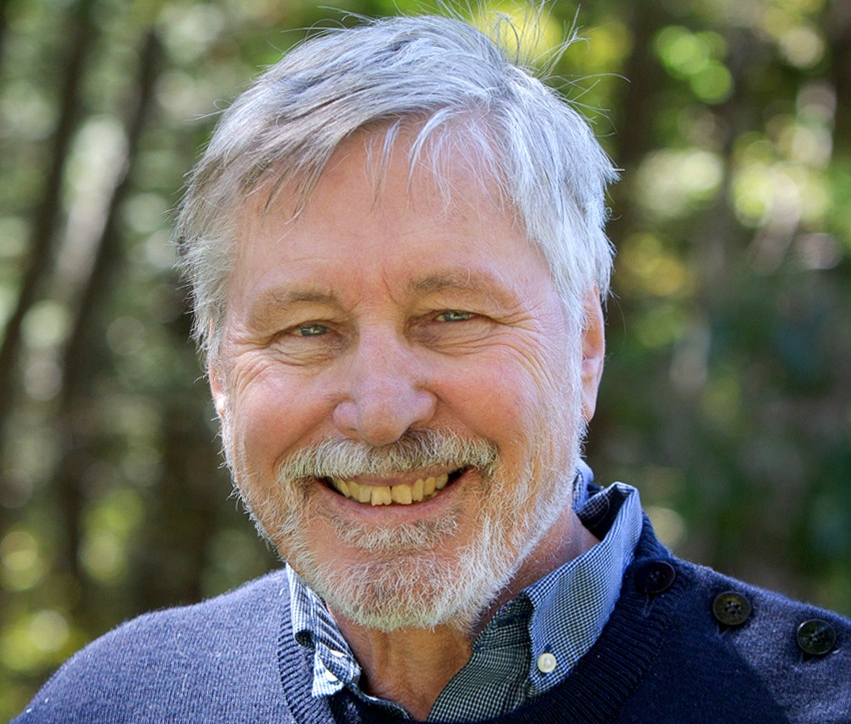
Your personal invite from world-renowned expert, Dr. Bessel van der Kolk
The Most Comprehensive Trauma Training Available Today
Many advanced trauma programs teach a single treatment modality.
This program takes a different approach.
The Traumatic Stress Studies Certificate Program brings together neuroscience, attachment, body-based therapies, relational approaches, trauma processing, expressive therapies, and cultural perspectives within one integrated learning experience.
You will learn to assess what each client needs, understand the principles behind different approaches, and develop the clinical judgment to work more flexibly across developmental stages, presenting concerns, cultures, and treatment settings.
This is not simply a library of recorded lectures.
The Supervised Edition combines expert teaching with ongoing case consultation, peer reflection, structured feedback, and in-person connection – giving you the opportunity to translate knowledge into clinical practice throughout the year.
Legacy Supervisors
Frank Anderson
Janina Fisher
Bessel Van Der Kolk
Innovator in Trauma and Biology and Pioneer in Integrating Models
Diana Fosha
Developer of Accelerated Experiential Psychodynamic Psychotherapy
Christine Courtois
Author of the Complex Trauma Treatment Guidelines for the American Psychological Association
Tian Dayton
Developer of the Relational Trauma Repair Model and Psychodrama Pioneer
Michael Mithoefer
Developer of Psychedelic-Assisted Psychotherapy
Linda Thai
Expert in grief, war trauma, and somatics
Ruth Cohn
Pioneer in centering neglect
Elizabeth Call
Expert in Psychedelic-Assisted Psychotherapy
Sustaining Supervisors
- Steve Freed - Addictions
- Melany Rivera Maldonado - Early Childhood
- Erin Stafford - Dissociation
- Peter Haugen - First Responders
- Inga Blom - Maternity
- Dr. Will - Racism, Moral Distress
- Chantelle Thomas - Psychedelic Integration
- Lucas Cassanova - Spirituality
- Deanna Davis - Somatic
- DeVon Mills - Sex, Couples
- Laura Land - Mindfulness
- Noga Miron - Survivors of Suicide
- Myira Khan - Discrimination
- Zeynep Catay - Somatics
- Justine Hardy - Somatics
- Rachel Cohen - Creative Arts
- Ilya Yacevich - Somatic, Arts
- Jenifer Levy - Addictions
- Mariah Rooney - Somatics, Queer Identities
Sample Cycle with First Legacy Supervisor
January
February
March
April
This program spans a 12 month period, from January to December each year. Participants are expected to set aside approximately 90-120 minutes/week. The program structure consists of three primary elements: asynchronous educational recordings; weekly supervision; and three in-person mini-conferences. Supervision is provided by two tiers of supervisors: luminaries in the field who rotate through each cohort for several months (with each group consulting with 2-3 legacy supervisors), and sustaining supervisors who accompany each cohort through the entire year. Participants are evaluated on their progress through formative (i.e., ongoing) feedback and summative (e.g., skill achievement-based) examination. Several elements are still being determined (for example, the length of each session) in collaboration with expert clinician consultation.
Weekly supervision rotates monthly through a cycle of four offerings, three of which occur with their cohort: sustaining supervision, legacy supervision, peer supervision, and, independently, self-paced learning and structured evaluative feedback. The sustaining supervisor will meet with the cohort for group supervision once/month, where two cases will be presented and discussed per session. The sustaining supervisor will also join the second supervisory session each month, which will be led by the legacy supervisors. The third session each month will be a peer supervision session for the cohort to reflect on didactic material and upon their personal evolution as clinicians, and to troubleshoot focal but immediate clinical concerns which arise. Sustaining supervisors will meet separately during this week with a “supervisor of supervisors” for their own peer supervision. The result will be a community of clinicians who are highly skilled in complex trauma intervention and whose skills have been demonstrated to high-tier field experts, allowing TRF and participants to make treatment referrals with confidence.
Sustaining supervisors will work with the cohort for the entire year; whereas legacy supervisors will rotate approximately quarterly. This structure allows for participants to both build a safe and stable community which tracks them over time while connecting them with the most established and impactful clinicians in our field.
In order to build a meaningful community that fosters personal connection among practitioners, supervisors and participants are invited to three in-person conferences each year, with a special discount only available for program participants. The cornerstone is TRF’s own conference, now in its 38th year, where many of the legacy supervisors in this field debuted. The conference will reserve special breakout/add on time for program participants with conference presenters (one to two days). The other two events (two-three days), in exciting locations like New York City, Tulum, and Oxford, will focus explicitly on the training community, with in-vivo supervision, flash talks, fireside chats, and brief “TED-style” talks, and a range of community-building events and networking opportunities.
Over the last six years, the Traumatic Stress Studies program has reached almost 12,000 people via its 26-module asynchronous course. While the intended audience was always professional mental health practitioners, enrolled participants have included a wide array of constituencies, from patients to parents to medical and educational sector workers. Analysis of current needs in the field highlight different strategies for these audiences, in terms of breadth and depth. For example, a participant seeking a self-help framework may need more focused, introductory information with triaging for mental health support when clinical concerns arise. In contrast, an experienced clinical audience may need direct supervision and peer networking.
These observations point towards a pivot in program structure away from a “one size fits all” asynchronous course. TRF’s first task will be to focus on its community of mental health professionals, and in the upcoming years will refine and strengthen its offerings to client, parent, and allied professional communities such as teachers and nurses. The upcoming iteration of the Traumatic Stress Studies Certificate Program, Supervised Edition–renamed to capture this pedagogical shift–will meet the professional community needs through continuing asynchronous educational material, and will now offer ongoing supervision in a year-long remote cohort-based model complemented by several in-person meetings each year.
The time is right for this transition. General knowledge in the field of complex trauma has expanded exponentially, but gaps still exist in specialty knowledge. Multiple virtual programs exist that focus on a single therapeutic modality, but few bring multiple perspectives together under one umbrella. Pioneers in the field have widely disseminated their models and specific approaches, but it’s time to develop the next generation of experts who, like TRF co-founder Bessel van der Kolk, move fluidly across a diverse toolkit to meet client needs. And while multiple remote trainings have created capacity for global dissemination, the field will be more robust if a community deepens its connections to one another through in person meetings, where we can be embodied and connected. It’s imperative to build this community while its elders and founders are here to guide and inspire us, creating urgency in making this shift now.
Through weekly sessions, live monthly Q&As, and access to a vibrant online community, you’ll explore the latest in neurobiology, attachment theory, somatic therapies, Internal Family Systems (IFS), EMDR, trauma-informed yoga, and more. Unlike programs that focus on a single modality, this course offers a holistic, multi-dimensional understanding of trauma—across developmental stages, cultures, and treatment settings.
This certificate program provides you with not just a credential, but a deep transformation in how you see and support others. You’ll walk away with a clear, actionable framework for helping clients heal—and the confidence that comes from learning alongside a global network of trauma-informed professionals.
Who can participate?
This program requires licensure in a field that is associated with practice in mental health. As participants will repeatedly present clinical case material, they should be actively engaged in clinical practice. Supervisors will have a range of expertise with adults, children, individuals and groups, and populations. The program is available in English, with a speciality program in Spanish and future plans for an Arabic version. If your country does not offer licensure in a mental health field, please reach out to us directly.
How long does the program last?
January through December each year
What does the price include?
- All of the TSS asynchronous educational material
- Monthly group supervision throughout the year with a sustaining supervisor
- Monthly group supervision throughout the year with up to three legacy supervisors (5-8 sessions per supervisor)
- Peer supervision
- Evaluative feedback
- Q+A sessions with treatment model developers and experts
- Registration for three mini-conferences (travel and accommodation costs are separate)
- Inclusion in our clinician repository
Is the supervisor signing off on cases for hours or licensure?
No, the supervisors are only acting in consultation. All responsibility for client care rests within the treating licensed clinician and their clinical setting.
Does the program grant a degree or university credit?
No, the program does not grant university credit or a degree, nor does it provide hours towards licensure. Such an iteration may be available in the future.
Are there specialty tracks?
We think it is most beneficial to practice to learn an array of techniques and from a wide range of client populations and settings, so participants will be grouped with a diverse group of colleagues. There are no specialty tracks, but participants will be invited to list their top choices for legacy supervisors.
Who is the ideal program participant? Is there an advanced version?
The ideal participant is someone who wants to deepen their practice and who would benefit both from increasing skill and knowledge as well as developing within a reflective, caring community. They may feel stuck or like there was a gap in their training, but they can be at any post-graduate, licensed or permitted career stage. At this point, there is not an advanced version, but we may develop that option based on need and demand!
What is the structure of supervision?
For most supervisory sessions, two to three supervisees will present a case for group discussion. They will provide a one-page de-identified case summary, specific questions for the group, and a one-page transcription or process note from a segment of their session. (From memory is fine.) At the beginning of the training year, the sustaining supervisor will facilitate several community-building sessions, and will facilitate a closing good-bye session at the end of the year. At the beginning of each module, the legacy supervisor will spend 1-2 sessions providing a model overview and clarifying their expectations, and will facilitate a closing summary session at the end of their module.
What are the in-person components?
Participants are invited to three in-person meetings: the TRF International Trauma Conference, held on the U.S. East Coast in May-early June of each year, and two other mini conferences will be spaced throughout the year.
When are the supervision sessions?
Participants can elect one of three times (listed in ET) on Tuesday, Wednesday, and Thursday: 8:00am, 12:00pm, and 6:30pm.
How are participants assigned to groups?
Participants are assigned on the basis of their preferred session time and on the basis of their top-ranked legacy supervisor choices.
What happens after the program is complete?
After the program is complete, participants will receive a letter of completion, specifying their accomplishments. They will also be added to TRF’s clinician referral list, and will be eligible to apply to become a program supervisor.
What languages?
We are able to offer the full program in English and an attenuated program at a reduced cost in Spanish.
What if I participated in the prior version of TSS?
If you participated in a prior version of TSS, you will be discounted whatever price you paid for TSS from the current program cost, as you have already received the asynchronous content. You will also receive updated course content, with new modules.
If you have participated in a prior version of TSS, please email us at [email protected]. Let us know the name and email address used to register, as well as the month and year your TSS cohort began. Once we confirm your participation, we will email you a unique discount code equivalent to the amount you paid to enroll in the prior course.
See what recent participants say...
An invitation from Dr. Bessel van der Kolk
The Traumatic Stress Studies Certificate Program is one of the most comprehensive trauma training programs available. Over 33 weeks, you’ll gain a deep understanding of traumatic stress and learn evidence-based approaches to treating adults and children from world-renowned faculty.
Rather than focusing on a single modality, this program provides an integrative framework for trauma treatment, covering the science of trauma alongside leading clinical approaches such as EMDR, IFS, neurofeedback, body-based therapies, and more. Monthly live faculty sessions give you the opportunity to discuss real clinical challenges and learn alongside a community of dedicated professionals.
Join clinicians from around the world who are advancing the field of trauma treatment. Apply today to deepen your expertise, strengthen your practice, and become part of the next cohort.
Sincerely,
Dr. Bessel van der Kolk
Certificate in Traumatic Stress Studies
A 12-Month Professional Training Program
Deepen your understanding of traumatic stress through a comprehensive year of online learning, in-person connection, and guidance from leading trauma supervisors.
Your enrollment includes:
- 12 Months of online training
- 3 in-person meetups throughout the year
- Opportunities to learn from and work with leading trauma supervisors
Program Tuition: $6,500
Apply to join the program
Please fill in the form below to apply to join. A member of the team will review your application and contact your for next steps.
Please note that you must be licensed in a field associated with practice in mental health. If you live and work in a country that does not provide licensure, please note this on your application.
Payment plans and installment payment options are available at checkout.
Choose from available payment options, including PayPal Pay in 3 or Pay in 5 and Klarna, subject to eligibility and provider terms.
Progam Eligibility Requirement
Please note that you must be licensed in a field associated with practice in mental health. If you live and work in a country that does not provide licensure, or you are unsure if you qualify to enroll, please email us at [email protected] to confirm your eligibility.
Returning Participant Discount
If you have previously participated in the Traumatic Stress Studies Certificate Program, we will offer a discount equivalent to what you paid when you enrolled.
Please email us at [email protected] and include the year you took the program. Once we verify your participation, we will send you a unique discount code.
Refund Policy
If you enroll in the program and would like to request a refund, please email [email protected]
Refunds, less a 10% processing fee, will be granted up until December 1, 2026. After this date, no refunds will be granted, but you are welcome to defer your enrollment to 2028.
